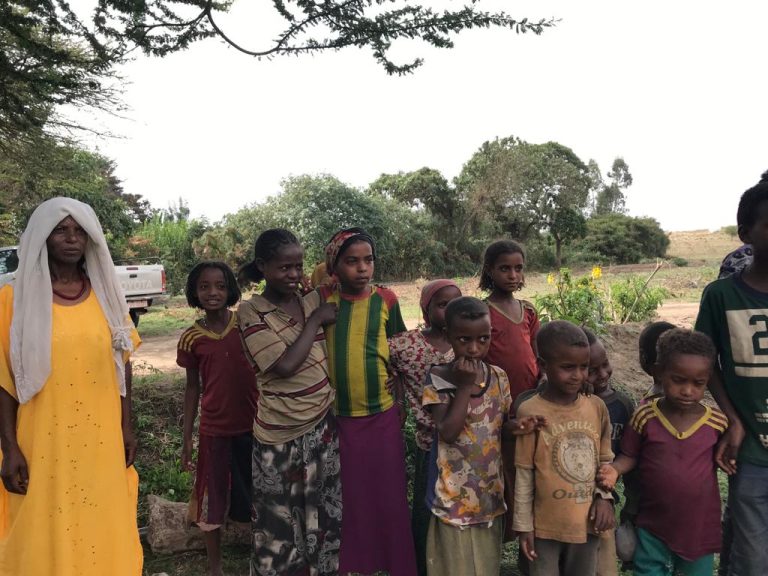

The principal aim of the project is to improve the water supply schemes in in Halaba zone, Southern Nations, Nationalities and Peoples’ Region (SNNPR), Ethiopia. Halaba is located ~300 km south-west of Addis Abeba. The first phase (2021 – 2022) of the project aimed to rehabilitate water supply schemes in three villages (kebeles) (Adegna Ashoka, Alemtena, Hamata).
The second phase (2023 – 2024) extends the scope to new areas with two main targets: 1) improved access to drinking water & basic sanitation in 3 new villages in the project area, and 2) holistic approach to sanitation, agriculture & income generation through ecological sanitation (EcoSan) in all project villages. In the second phase, WaterFinns collaborates with another Finnish NGO Pääskyt (see website).
The project area suffers from drought and poverty. WaterFinns’ (WF) local partner Water Action (WACT), has identified technical and societal problems, which hamper functionality of drinking water supplies in the area. These issues include service breaks, inadequate operation, management, low participation of women and persons with disabilities (PwDs) in scheme management, and one scheme being non-functional due to pump breakage. These issues endanger the equitable right to drinking water and, thus, health of the people in the area, as the schemes cannot provide adequate drinking water services.
Rehabilitation measures are built on Water Safety Plans (WSPs), which are deemed as the most effective means of maintaining a safe drinking water supply by the World Health Organization. The approach is expanded to WSP+++, to address climate change adaptation and disaster risk reduction (+), operation and maintenance (O&M) and water fee collection (+) as well as inclusion (+). The activities will cover inclusive school water, sanitation and hygiene (WASH) management training, inclusive capacity building of Water Supply, Sanitation and Hygiene Committees (WASHCOs), O&M plans as well as development of catchment level proposals to ensure long-term sustainability. Inclusion in kebeles will be strengthened, e.g. by nominating women and PwDs into scheme management roles.
The planned activities will result in improved access to drinking water for over 29 000 people. This will contribute to their health, reduce time spent to get water and increase equity of women, children and PwDs. We also aim to increase understanding of the roles of all stakeholders in scheme management.
WACT is the implementer of the project under WF’ supervision and advice. WACT’s capacity in community management and inclusion will be developed and their communication strategy updated.