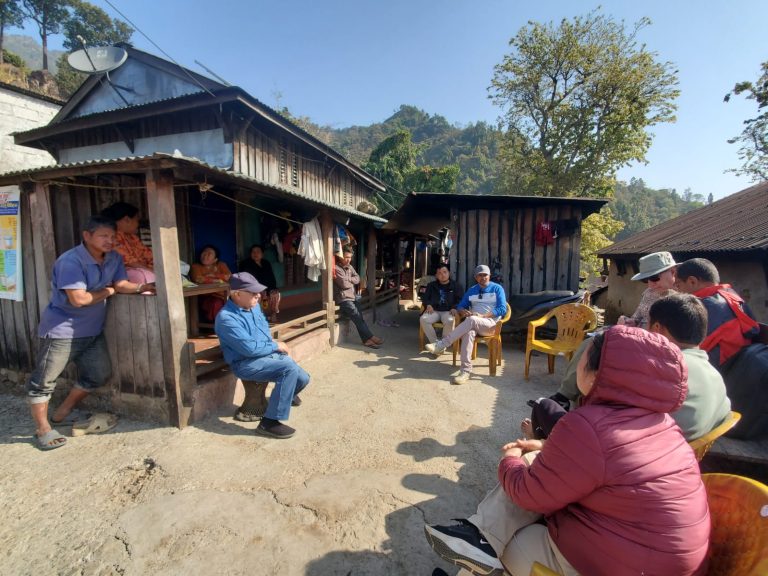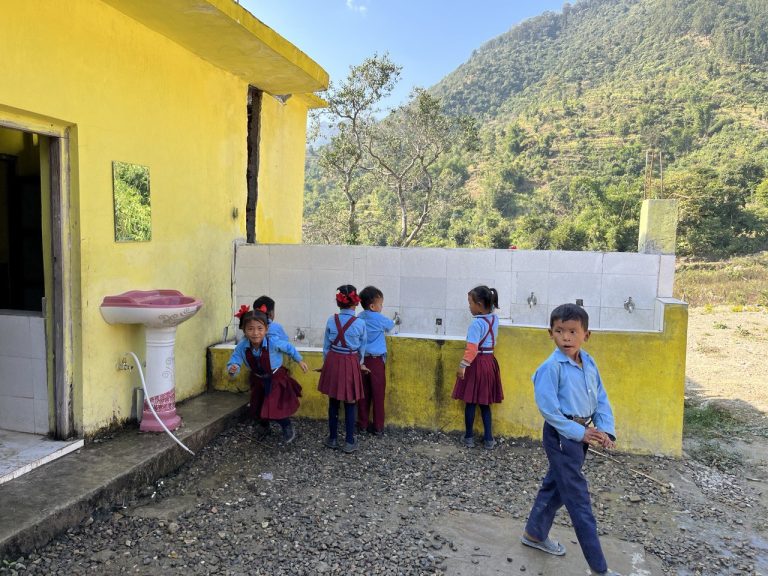
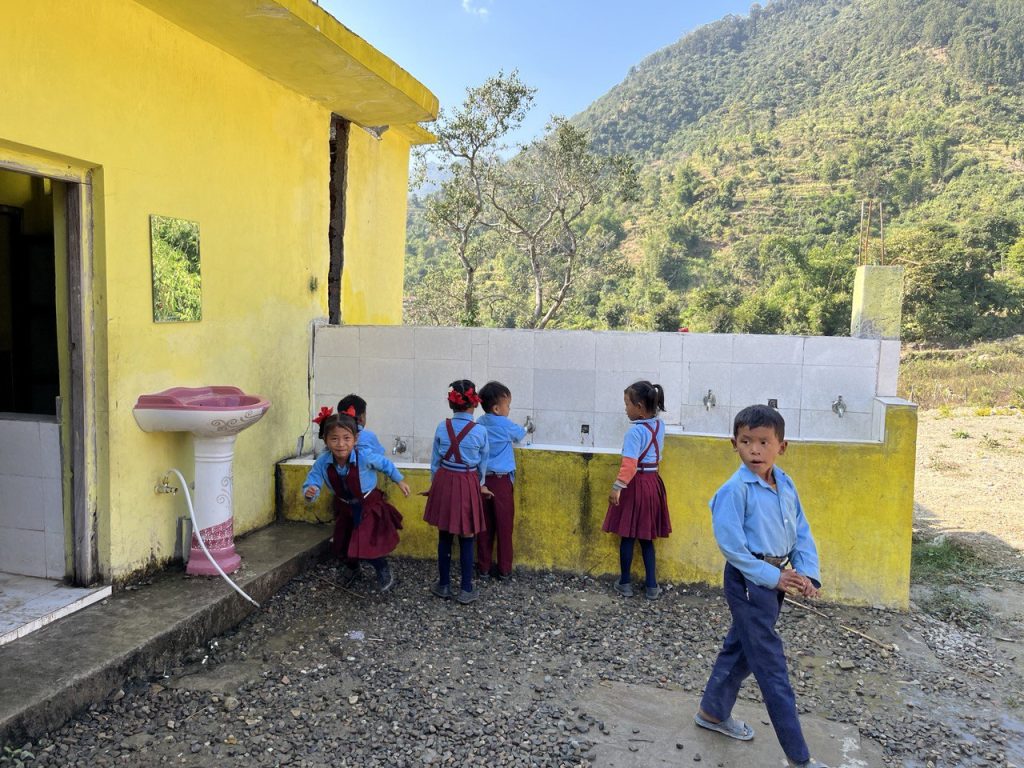
The principal objective of the WASH Model Village Project (MVP) in Devchuli, Nepal, is to capacitate rural communities and Devchuli Municipality to reach Nepali national Total Sanitation (TS) standards. The main project output is a set of Model Villages that satisfy TS criteria. The project aims to establish procedures and participatory mechanisms for TS at community and municipality level, that are well documented and easily replicable in other wards and municipalities.
The project builds upon and aims to improve the national TS monitoring practices and utilise the Community-led TS concept. It supports smart water use and focuses on improving Gender Equality and Social Inclusion (GESI) through a participatory Human-Rights Based Approach (HRBA). The project works in two wards of the least developed northern hilly area of Devchuli Municipality in Nawalpur district of Western Nepal.
The key implementing partners for the WaterFinns ry. are CATN and Devchuli Municipality. Special attention is put on supporting disadvantaged groups through e.g. ensuring equal participation and raising awareness on menstrual hygiene management.
Aims of the Project
The purpose of the project is:
“improved quality of life, sanitation, and access to safe water in the project area
via enhanced inclusive and democratic capacity to maintain sanitation and manage water
at household, community, and municipality levels”
In practice, this translates to a set of expected outcomes at different levels (municipality, community, household). The project focuses on four outcome areas:
- Governance and participation – capacitate Devchuli Municipality to reach national Total Sanitation (TS) standards by establishing procedures and participatory mechanisms for TS that are well documented and easily replicable in other communities and municipalities.
- Sanitation – establish a set of Model Villages that satisfy TS criteria.
- Water – promote smart multiple water use and water safety planning for improving sustainable access to safe water.
- GESI and DAGs – special attention is put on supporting disadvantaged groups through e.g., ensuring equal participation and awareness raising on Menstrual Hygiene Management (MHM).
The Project is financed by Ministry of Foreign Affairs (Finland), and supported by Maa- ja vesitekniikan tuki ry (MVTT).